What Is Body-Oriented Therapy? Understanding the Mind-Body Connection
When people hear the words body-oriented therapy, they're often not quite sure what to imagine.
Some assume it's yoga. Others think it involves massage or movement. And some worry they'll be expected to do something they're not comfortable with.
The reality is much simpler.
Body-oriented therapy starts with a very human observation: our thoughts, emotions and bodies are constantly communicating with one another. You don't have to look very far to notice it. Think about the last time you were anxious before an important meeting. Perhaps your heart was racing, your shoulders felt tense or your stomach was in knots. Or maybe you've experienced grief so deeply that it felt physically heavy, as though someone had placed a weight on your chest.
We often think of emotions as something that happens in our minds, but our bodies have been responding to them long before we've found the words to describe them.
This is why I integrate body-oriented approaches into my work as a therapist. Not because I believe every session needs to involve breathing exercises or movement, but because sometimes our bodies tell us something our minds haven't fully understood yet.

Why talking isn't always enough
Traditional talk therapy can be incredibly powerful. Putting experiences into words helps us make sense of what has happened and often brings clarity to situations that once felt confusing. At the same time, many of the people I work with tell me something similar.
"I know why I react this way, but I still can't seem to change it."
They understand their patterns intellectually. They know where their perfectionism comes from. They recognise why they struggle to set boundaries or why certain situations trigger anxiety.
Yet their body continues to react as though the threat is still present.
This isn't because they're doing therapy "wrong."
It's because insight and regulation are two different things.
Imagine someone who's terrified of public speaking. They may know, logically, that the audience isn't dangerous. They know nobody is trying to harm them. But the moment they stand in front of a room, their heart races, their breathing becomes shallow and their muscles tense.
Their body hasn't received the same message as their mind.
Body-oriented therapy helps bridge that gap.

Listening to what your body is saying
One of the things I often invite clients to do is something surprisingly simple.
Pause.
Take a breath.
Notice what's happening in their body before trying to explain it.
At first, this can feel unfamiliar. We're used to analysing our thoughts, solving problems and searching for explanations. Many of us have spent years ignoring our bodies altogether, especially if we've been busy looking after other people, building careers or simply trying to get through difficult periods of life.
But our bodies are constantly giving us information.
Sometimes anxiety shows up as tightness in the chest.
Sometimes sadness feels like heaviness in the shoulders.
Sometimes anger appears as tension in the jaw or fists before we've even realised we're angry.
The goal isn't to overanalyse every physical sensation. It's to become curious about what your body might be trying to communicate.
What does a body-oriented therapy session actually look like?
This is probably the question I get asked most often. The answer is that, from the outside, it looks very much like therapy. We sit together and talk. The difference is that, at certain moments, I might gently invite your attention away from the story itself and towards your experience of it. For example, if you're describing a difficult conversation at work, I might ask:
"As you talk about this, what do you notice happening in your body?"
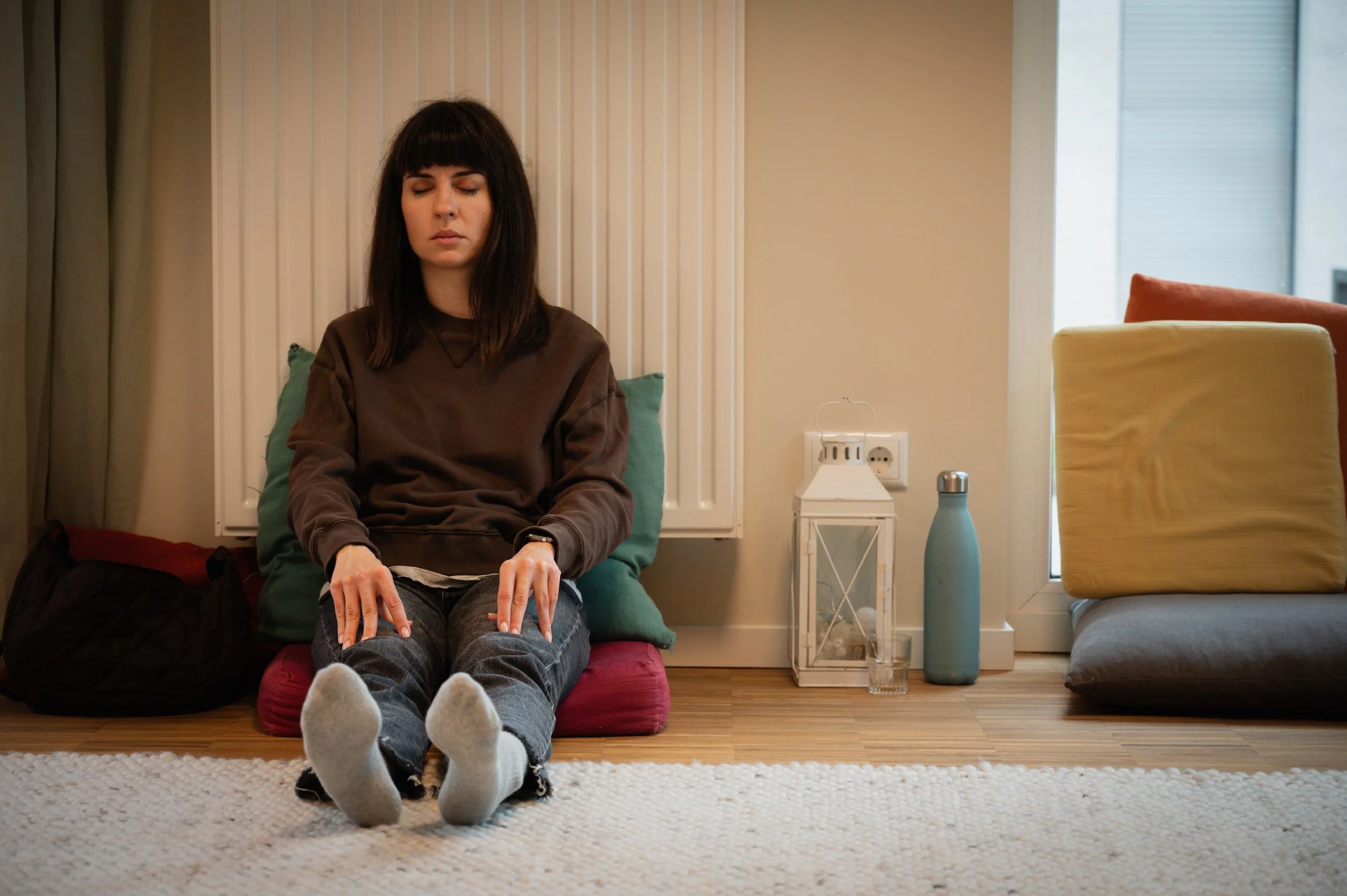
Perhaps you become aware that you've been holding your breath. Maybe your shoulders have lifted towards your ears. Maybe your chest feels tight. Or maybe you don't notice anything at all—and that's perfectly okay too.
Body awareness isn't something people either have or don't have. It's something we gradually develop. There is never any pressure to do exercises that don't feel comfortable. Therapy is collaborative, and we'll always decide together what feels helpful.
Who is body-oriented therapy helpful for?
While almost anyone can benefit from becoming more aware of the connection between mind and body, I often find this approach particularly helpful for people experiencing anxiety, chronic stress or burnout.
Many of these clients have become incredibly skilled at pushing through discomfort. They continue working despite exhaustion. They ignore headaches, tense muscles or disrupted sleep because there's always something else that feels more urgent.
Over time, however, our bodies have a way of insisting that we pay attention.
Sometimes that's through persistent fatigue.
Sometimes through panic attacks.
Sometimes through a feeling of constantly being "on edge."
Learning to notice these early signals can be an important part of preventing overwhelm before it becomes a crisis.
Does body-oriented therapy replace talking?
Not at all. In my work, the two go hand in hand. Some sessions are almost entirely conversational. Others might include moments of slowing down, noticing the breath or exploring what emotions feel like physically. I don't follow a fixed formula because every client is different.
What matters most is finding an approach that feels supportive for the person sitting in front of me. Therapy isn't about fitting you into a particular method. It's about adapting the work to your needs.
A different way of understanding yourself
One of the things I love most about body-oriented therapy is that it often helps people relate to themselves with more compassion.
Instead of asking:
"What's wrong with me?",
they begin asking:
"What is my body trying to protect me from?"
That's a very different conversation. It shifts the focus away from self-criticism and towards curiosity. And curiosity is often where meaningful change begins.
Final thoughts
We spend so much of our lives living from the neck up—thinking, analysing, planning and solving problems. While these are valuable skills, they sometimes cause us to lose touch with another important source of information: our bodies.
Body-oriented therapy isn't about ignoring thoughts or replacing conversation with movement. It's about recognising that healing doesn't only happen through understanding our experiences intellectually. Sometimes it also happens through noticing, slowing down and learning to feel safe in our own bodies again.
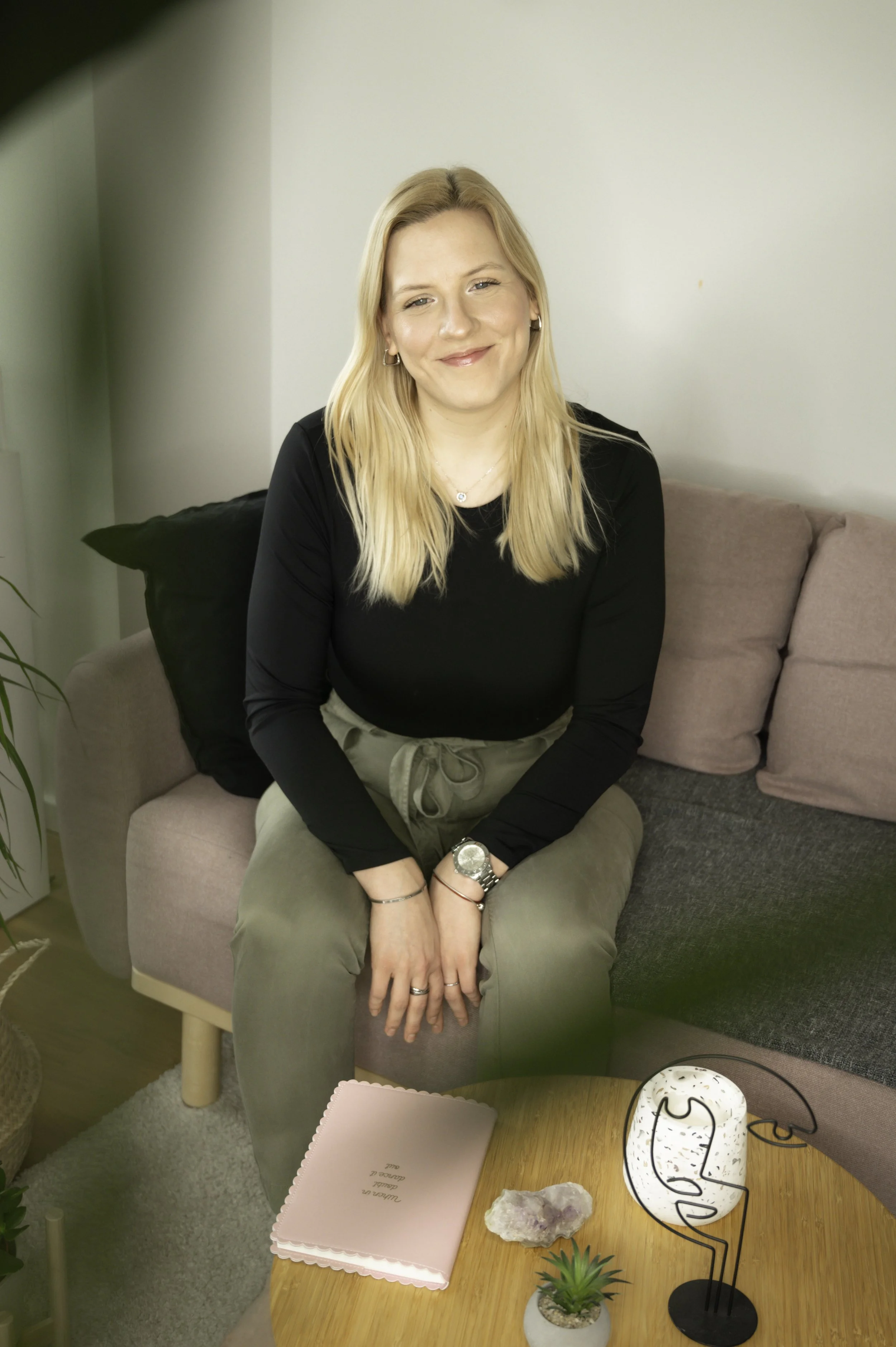
If you're looking for an English-speaking therapist in Berlin and you're curious about a therapeutic approach that integrates both mind and body, I'd be happy to answer any questions you might have during an initial consultation.