What Anxiety Really Looks Like in Everyday Life
When people think about anxiety, they often imagine panic attacks, racing hearts or someone visibly overwhelmed. Sure, sometimes anxiety looks like that. But more often, it doesn't.
More often, it looks like replying to an email three times because you're worried you sounded rude. It looks like replaying yesterday's conversation on your commute home or lying awake wondering whether you made the wrong decision at work.
From the outside, you might seem calm, organised and capable.
Inside, your mind rarely gets a day off.
Anxiety isn't always loud. Sometimes it's incredibly quiet. It becomes part of your everyday life for so long that you stop recognising it as anxiety at all.

"I've always been like this."
This is one of the things I hear most often in therapy. People tell me they've always been worriers. They've always thought ahead. They've always been responsible. Over time, these qualities become part of their identity.
Being organised is a strength.
Thinking things through is useful.
Planning ahead can make life easier.
The difficulty comes when those strengths become impossible to switch off. When every decision feels like it has to be the perfect one. When your mind keeps searching for problems long after they're solved. When resting feels uncomfortable because there's always something else you should be doing.
Anxiety often disguises itself as productivity
Many people don't recognise anxiety because it looks like being organised. Your calendar is colour-coded. You arrive early. You prepare for every possible outcome. You answer messages quickly. You rarely forget anything.
From the outside, people compliment you on how "together" you seem. What they don't see is how much energy it takes to keep everything under control. Sometimes anxiety convinces us that if we prepare enough, think enough or work hard enough, we'll finally feel safe.
The problem is that the goalposts keep moving.
There's always one more thing to check.
One more email to send.
One more scenario to prepare for.
It's exhausting trying to predict everything
One of anxiety's favourite questions is:
"But what if...?"
What if I say the wrong thing?
What if they don't like me?
What if I make a mistake?
What if something goes wrong?
Our minds are incredibly good at imagining future problems. Unfortunately, they're much less interested in imagining positive outcomes. Living with anxiety can sometimes feel like your brain is constantly running emergency drills for situations that may never happen.

Rest can feel surprisingly uncomfortable
People often assume that if you're anxious, you'll welcome the chance to relax. Not always. Many people tell me that the moment they stop, their mind becomes louder.
Suddenly there's space for every unfinished task, every worry and every conversation they hadn't had time to think about during the day. So instead of resting, they stay busy.
Not because they enjoy being busy. Because being busy feels easier than sitting with uncertainty.
Anxiety doesn't only live in your thoughts
Our bodies often notice anxiety before we do. You might find yourself clenching your jaw without realising it. Holding your breath while reading emails. Feeling tension in your shoulders by lunchtime.
Struggling to fall asleep because your body still feels alert, even though you're exhausted.
Sometimes people come to therapy because of headaches, stomach issues or difficulty sleeping, only to realise that their nervous system has been under pressure for much longer than they realised.
This is one of the reasons I work with body-oriented therapy. Our bodies often tell us stories that our thoughts haven't caught up with yet.

Relationships can become harder too
Anxiety doesn't stay neatly contained inside our own minds. It often finds its way into our relationships.mMaybe you need constant reassurance that everything is okay.
Maybe you avoid difficult conversations because you're worried about conflict.
Maybe you replay interactions afterwards, wondering if you upset someone.
Or perhaps you find yourself saying yes to things you don't want to do because disappointing people feels unbearable.
These aren't character flaws. They're often ways our nervous system has learned to keep us safe.
Can therapy help with anxiety?
Yes—but perhaps not in the way people expect. Therapy isn't about teaching you to "stop worrying." If it were that simple, you would have done it already. Instead, therapy helps you understand what your anxiety is trying to protect you from.
Together, we begin noticing the situations that trigger it, the beliefs that keep it alive and the patterns that make it stronger. Over time, you learn that anxiety doesn't have to be the voice making every decision.
That doesn't mean anxious thoughts disappear completely. It means they no longer run the show.
A final thought
If you've recognised yourself while reading this, you might be wondering whether what you're experiencing is "bad enough" to talk to someone about. I'd encourage you not to measure your experience against someone else's.
You don't need to wait until anxiety becomes overwhelming before seeking support.
Sometimes the most meaningful changes happen when we pay attention to the quieter signs—the constant overthinking, the inability to switch off, the feeling that life has become something to manage rather than enjoy.
Therapy offers a space to understand those patterns with curiosity rather than judgement.
If you're looking for an English-speaking therapist in Berlin, or you're based in Athens, Zagreb or elsewhere and would prefer online therapy, I'd be happy to support you. Together, we can explore what anxiety looks like in your life and, more importantly, what life might look like beyond it.
Signs of Burnout: It's Not Always What You Think
When most people picture burnout, they imagine someone who's completely exhausted. Someone who can't get out of bed, who has no energy left, who's visibly struggling.
Sometimes burnout looks like that.
But more often, it doesn't.

More often, burnout looks like answering emails at 10 p.m. because you're "just catching up." It looks like cancelling plans because you're too tired to be present, even though you've spent the whole day working. It looks like waking up exhausted after eight hours of sleep or feeling strangely emotional over things that never used to bother you.
Many of the people I meet in therapy don't come in saying, "I think I'm burnt out."
They usually say something like:
"I'm just tired."
"I can't seem to switch off anymore."
"I feel like I'm constantly behind."
Or perhaps:
"I don't know what's wrong with me. I used to enjoy my work."
Burnout rarely arrives overnight. It's usually something that builds quietly over weeks or months until one day you realise that simply getting through the day feels harder than it used to.
Burnout is more than being stressed
Stress and burnout are often used interchangeably, but they're not the same thing.
Stress is usually linked to a specific situation. A busy project at work, a house move, exams or a demanding period of life. Although it can feel overwhelming, there's often a sense that things will settle once the situation changes.
Burnout is different.
Instead of feeling temporarily overwhelmed, you begin to feel emotionally, mentally and physically depleted. The energy that once helped you cope simply isn't there anymore.
You might keep functioning. You might still go to work, meet deadlines and smile through meetings.
But underneath, everything feels heavier.
That's why burnout can be difficult to recognise, especially in people who are used to being capable.

The signs are often subtle at first
One of the reasons burnout is missed is because it rarely announces itself dramatically.
It starts with little things.
You wake up tired, even after sleeping.
You struggle to concentrate on tasks that used to feel easy.
You feel irritated by small inconveniences.
You notice yourself saying, "Once I get through this week, it'll be better."
Then another week passes.
And another.
Over time, these small changes begin to affect almost every area of your life.
You're always "on"
Many people experiencing burnout describe feeling as though they never truly relax.
Even when they're sitting on the sofa, their mind is somewhere else.
Thinking about tomorrow's meeting.
Replying to emails.
Remembering something they forgot to do.
Planning the weekend.
Their body is technically resting, but their nervous system never gets the message that it's safe to switch off.
Over time, this constant state of alertness becomes exhausting.
The things you once enjoyed start to feel like effort
One of the quieter signs of burnout is losing interest in things that used to bring you joy.
Maybe you used to love cooking, but now ordering takeaway feels easier.
You stop exercising, not because you don't want to, but because you can't find the energy.
You decline invitations from friends because the thought of socialising feels overwhelming.
This isn't laziness.
It's often a sign that your emotional resources have been stretched for too long.

Your body starts asking for attention
Burnout isn't only something we think. It's something we feel. Many people notice headaches, muscle tension, digestive issues or disrupted sleep long before they recognise they're emotionally exhausted.
Our bodies have a remarkable way of letting us know when something isn't sustainable.
The challenge is that many of us have become very good at ignoring those signals.
We tell ourselves we'll rest after the next deadline.
After the holiday.
After the promotion.
But our bodies don't work according to our calendars.
This is one of the reasons I often integrate body-oriented approaches into therapy. Learning to notice what your body is communicating can be just as important as understanding what's happening in your thoughts.
You're still functioning—but it takes so much more effort
One of the biggest misconceptions about burnout is that you have to stop functioning completely. In reality, many people continue performing well at work. They're productive. Reliable, successful- from the outside, everything looks fine.
Inside, however, they're running on determination rather than energy.
Every task feels like it requires twice the effort it used to.
If this sounds familiar, you're not alone.
I've written more about this in The Hidden Cost of Being the Strong One, where I explore what happens when we're so used to being capable that we don't notice how much it's costing us.
Burnout doesn't mean you've failed
There's often a lot of shame attached to burnout. People tell themselves they should be coping better. That everyone else seems to manage. That they just need to be more organised, more disciplined or more resilient. But burnout isn't a sign of weakness.
It's often a sign that you've been strong for a very long time. Sometimes it's the result of saying yes when you wanted to say no. Sometimes it's carrying responsibilities that were never meant to be carried alone. Sometimes it's years of putting yourself at the bottom of your own priority list.
Burnout isn't a personal failure. It's information. It's your mind and body asking you to pay attention.

When is it time to seek support?
You don't have to wait until you're completely exhausted before talking to someone. In fact, the earlier you recognise the signs, the easier it is to make meaningful changes. Therapy can offer a space to slow down and understand not only why you're burnt out, but also the patterns that may have contributed to it.
Perhaps you struggle to set boundaries.
Perhaps your sense of self-worth has become closely tied to achievement.
Perhaps you've forgotten what rest feels like without guilt.
These aren't things to "fix."
They're things to become curious about.
A final thought
Burnout doesn't happen because you aren't strong enough.
More often, it happens because you've been strong for too long without giving yourself permission to pause.
If you've recognised yourself in parts of this article, take that as an invitation to slow down rather than another reason to criticise yourself.
Recovery doesn't begin with doing more.
It begins with listening.
And sometimes, listening starts with allowing yourself to ask for support.
If you're looking for an English-speaking therapist in Berlin, or you're based in Athens, Zagreb, or elsewhere and looking for online therapy, I'd be happy to support you in exploring what's beneath the exhaustion and how you can begin reconnecting with yourself again.
What Is Body-Oriented Therapy? Understanding the Mind-Body Connection
When people hear the words body-oriented therapy, they're often not quite sure what to imagine.
Some assume it's yoga. Others think it involves massage or movement. And some worry they'll be expected to do something they're not comfortable with.
The reality is much simpler.
Body-oriented therapy starts with a very human observation: our thoughts, emotions and bodies are constantly communicating with one another. You don't have to look very far to notice it. Think about the last time you were anxious before an important meeting. Perhaps your heart was racing, your shoulders felt tense or your stomach was in knots. Or maybe you've experienced grief so deeply that it felt physically heavy, as though someone had placed a weight on your chest.
We often think of emotions as something that happens in our minds, but our bodies have been responding to them long before we've found the words to describe them.
This is why I integrate body-oriented approaches into my work as a therapist. Not because I believe every session needs to involve breathing exercises or movement, but because sometimes our bodies tell us something our minds haven't fully understood yet.

Why talking isn't always enough
Traditional talk therapy can be incredibly powerful. Putting experiences into words helps us make sense of what has happened and often brings clarity to situations that once felt confusing. At the same time, many of the people I work with tell me something similar.
"I know why I react this way, but I still can't seem to change it."
They understand their patterns intellectually. They know where their perfectionism comes from. They recognise why they struggle to set boundaries or why certain situations trigger anxiety.
Yet their body continues to react as though the threat is still present.
This isn't because they're doing therapy "wrong."
It's because insight and regulation are two different things.
Imagine someone who's terrified of public speaking. They may know, logically, that the audience isn't dangerous. They know nobody is trying to harm them. But the moment they stand in front of a room, their heart races, their breathing becomes shallow and their muscles tense.
Their body hasn't received the same message as their mind.
Body-oriented therapy helps bridge that gap.

Listening to what your body is saying
One of the things I often invite clients to do is something surprisingly simple.
Pause.
Take a breath.
Notice what's happening in their body before trying to explain it.
At first, this can feel unfamiliar. We're used to analysing our thoughts, solving problems and searching for explanations. Many of us have spent years ignoring our bodies altogether, especially if we've been busy looking after other people, building careers or simply trying to get through difficult periods of life.
But our bodies are constantly giving us information.
Sometimes anxiety shows up as tightness in the chest.
Sometimes sadness feels like heaviness in the shoulders.
Sometimes anger appears as tension in the jaw or fists before we've even realised we're angry.
The goal isn't to overanalyse every physical sensation. It's to become curious about what your body might be trying to communicate.
What does a body-oriented therapy session actually look like?
This is probably the question I get asked most often. The answer is that, from the outside, it looks very much like therapy. We sit together and talk. The difference is that, at certain moments, I might gently invite your attention away from the story itself and towards your experience of it. For example, if you're describing a difficult conversation at work, I might ask:
"As you talk about this, what do you notice happening in your body?"
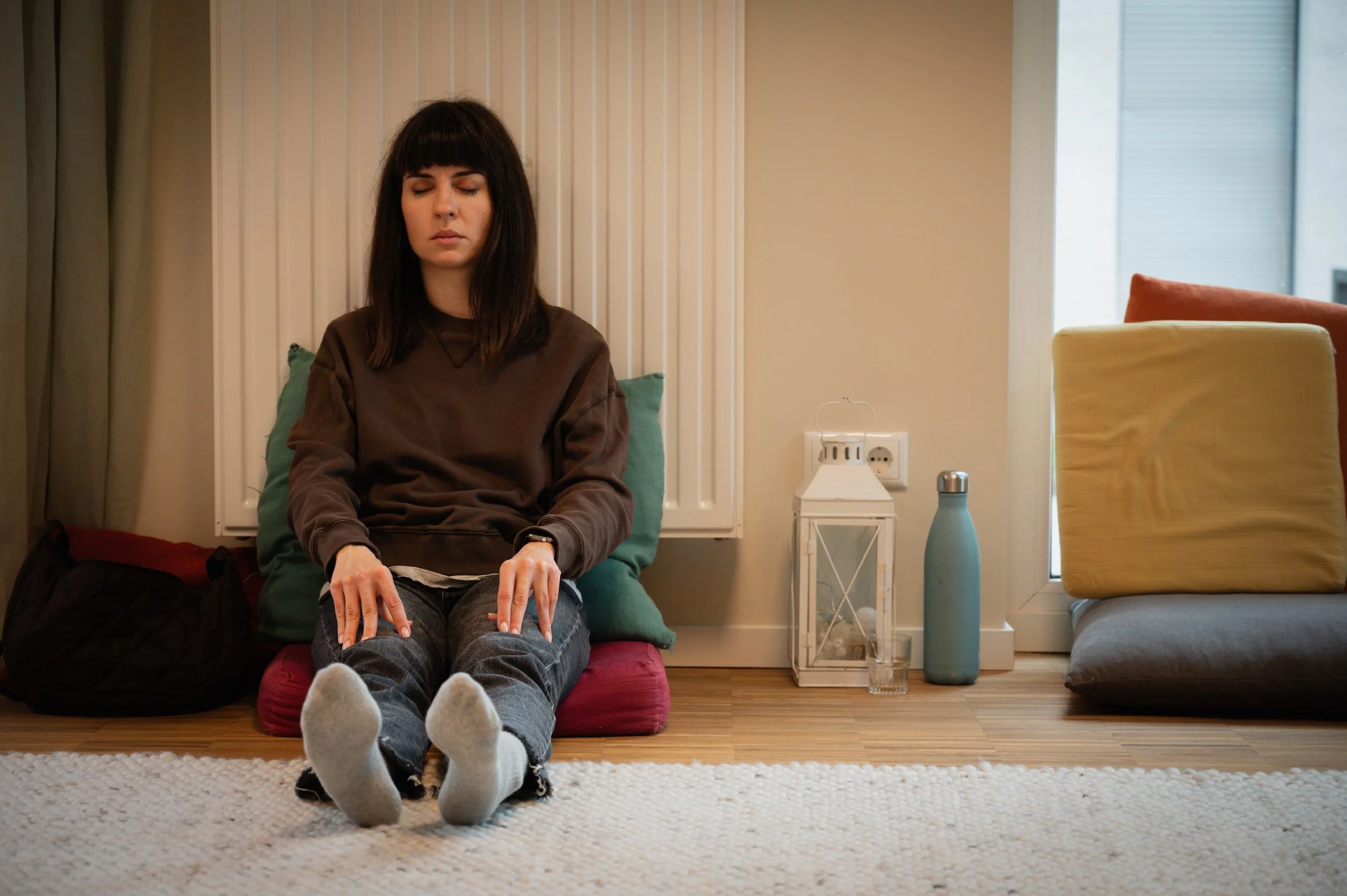
Perhaps you become aware that you've been holding your breath. Maybe your shoulders have lifted towards your ears. Maybe your chest feels tight. Or maybe you don't notice anything at all—and that's perfectly okay too.
Body awareness isn't something people either have or don't have. It's something we gradually develop. There is never any pressure to do exercises that don't feel comfortable. Therapy is collaborative, and we'll always decide together what feels helpful.
Who is body-oriented therapy helpful for?
While almost anyone can benefit from becoming more aware of the connection between mind and body, I often find this approach particularly helpful for people experiencing anxiety, chronic stress or burnout.
Many of these clients have become incredibly skilled at pushing through discomfort. They continue working despite exhaustion. They ignore headaches, tense muscles or disrupted sleep because there's always something else that feels more urgent.
Over time, however, our bodies have a way of insisting that we pay attention.
Sometimes that's through persistent fatigue.
Sometimes through panic attacks.
Sometimes through a feeling of constantly being "on edge."
Learning to notice these early signals can be an important part of preventing overwhelm before it becomes a crisis.
Does body-oriented therapy replace talking?
Not at all. In my work, the two go hand in hand. Some sessions are almost entirely conversational. Others might include moments of slowing down, noticing the breath or exploring what emotions feel like physically. I don't follow a fixed formula because every client is different.
What matters most is finding an approach that feels supportive for the person sitting in front of me. Therapy isn't about fitting you into a particular method. It's about adapting the work to your needs.
A different way of understanding yourself
One of the things I love most about body-oriented therapy is that it often helps people relate to themselves with more compassion.
Instead of asking:
"What's wrong with me?",
they begin asking:
"What is my body trying to protect me from?"
That's a very different conversation. It shifts the focus away from self-criticism and towards curiosity. And curiosity is often where meaningful change begins.
Final thoughts
We spend so much of our lives living from the neck up—thinking, analysing, planning and solving problems. While these are valuable skills, they sometimes cause us to lose touch with another important source of information: our bodies.
Body-oriented therapy isn't about ignoring thoughts or replacing conversation with movement. It's about recognising that healing doesn't only happen through understanding our experiences intellectually. Sometimes it also happens through noticing, slowing down and learning to feel safe in our own bodies again.
If you're looking for an English-speaking therapist in Berlin and you're curious about a therapeutic approach that integrates both mind and body, I'd be happy to answer any questions you might have during an initial consultation.
What Happens During Your First Therapy Session?
Booking your first therapy session can feel exciting, relieving… and slightly terrifying, all at the same time.
One of the questions I hear most often is:
"What actually happens in the first session?"

People often imagine they'll be expected to tell their entire life story in an hour, answer deeply personal questions or somehow know exactly what they want to work on.
The good news? None of that is expected. The first session is simply a conversation.
It's an opportunity for us to get to know one another and decide whether we feel like a good fit. Just as you're getting a sense of me, I'm also getting to understand you, your experiences and what brings you to therapy.
There's no pressure to have all the answers before you walk through the door.
You don't need to prepare
One of the biggest misconceptions about therapy is that you need to arrive with a clear explanation of what's wrong. You don't. Some people come to therapy because they're experiencing anxiety or burnout. Others because they're navigating a relationship, a career change or grief. And some simply say: "I don't really know why I'm here. I just know something doesn't feel right anymore." That's more than enough. You don't need to organise your thoughts beforehand or rehearse what you're going to say. You can simply arrive as you are.

We'll start by getting to know each other
Our first session is about understanding what has brought you here and what you're hoping might be different. I'll ask questions, but this isn't an interview or a checklist. Think of it as a conversation.
Some of the things we might explore include:
What's been happening recently?
How long have you been feeling this way?
Have you had therapy before?
What made you reach out now?
What would you like to work on as a first topic?
There aren't any right or wrong answers. Sometimes we'll spend most of the session talking about what's happening today. Sometimes we'll naturally begin exploring your past. It depends entirely on you.
You don't have to tell me everything
This is something I'd really like you to know. Trust isn't built in one hour. You don't need to tell me your deepest fears or most painful experiences during our first session. Therapy isn't about getting through your entire story as quickly as possible. It's about creating enough safety that, over time, those conversations become possible. We'll go at your pace. Always.

You can ask me questions too
People sometimes forget that therapy is a relationship. You're not just choosing therapy. You're choosing a therapist. That means you get to ask questions too.
You might want to know:
How do you usually work?
How often should we meet?
What happens if I don't know what to talk about?
How long does therapy usually last?
Have you worked with people experiencing something similar?
If something is important to you, ask.
The first session is just as much about helping you decide whether I'm the right therapist for you.
What my sessions are like
Every therapist works differently. My approach is collaborative. I don't believe therapy is about someone sitting opposite you with all the answers. Instead, I see therapy as something we build together. Sometimes we'll explore thoughts and emotions. Sometimes we'll notice what's happening in your body. Sometimes we'll sit quietly with something that doesn't yet have words.
I work integratively, which means I draw from different therapeutic approaches depending on what feels most helpful for you rather than following one rigid method. If you'd like to learn more about this, I've written more about my approach here:

What if I cry?
Then you cry. It's completely okay. Some people cry during their first session. Others don't cry for months. Some laugh. Some apologise. Some tell me they've been nervous all week. There is no "right" way to be in therapy. You don't need to hold everything together. In fact, therapy is one of the few places where you don't have to.
What if we don't click?
This is an important question. Sometimes people worry that if the first therapist they meet doesn't feel right, therapy simply isn't for them. That's not true. Finding the right therapist is a little like finding the right pair of shoes. You can appreciate that something is well made while also recognising it doesn't fit you. The therapeutic relationship is one of the biggest predictors of successful therapy. So if something doesn't feel right, it's okay to keep looking. Finding the right fit is worth it. I've written more about this here:
→ How to Choose the Right Therapist
What happens after the session?
Towards the end of our meeting, we'll spend a few minutes reflecting on how the session felt. We'll talk about whether it feels like a good fit and discuss possible next steps if you'd like to continue. There's no pressure to decide immediately. Some people know straight away. Others prefer to take a little time to think about it. Both are completely okay.
A final thought
I know how much courage it takes to book that first appointment. Often, the hardest part isn't therapy itself. It's reaching out. If you're reading this because you're wondering whether to book your first session, I'd like to reassure you of one thing:
You don't need to arrive with the perfect explanation.
You don't need to know exactly where to begin.
You simply need to be willing to begin somewhere.
Everything else, we'll figure out together.
How Do You Know It's Time to Start Therapy? (9 Signs It Might Help)
One of the biggest myths about therapy is that you have to be falling apart before you're allowed to ask for help. As a therapist, I hear this all the time:
"Other people have it much worse than I do."
"I should be able to deal with this on my own."
"Maybe I'm just overreacting."
Sometimes people spend months, or even years, trying to convince themselves that what they're experiencing isn't "bad enough." The truth is, therapy isn't reserved for people in crisis. It's for anyone who wants to understand themselves better, navigate a difficult period of life or simply stop feeling stuck. If you've been wondering whether therapy might help, here are some signs that it could be the right time to reach out.

You don't feel like yourself anymore
This is one of the hardest things to describe:
Nothing dramatic may have happened. You still go to work. You meet your responsibilities. From the outside, everything looks fine.
But something feels... different. You're more irritable. More exhausted. Less excited about the things you used to enjoy. Maybe you've started saying things like:
"I'm just tired all the time."
Or:
"I don't know what's wrong with me lately."
Often, therapy starts here, not because life has fallen apart, but because you've noticed you've drifted away from yourself.
You're constantly overwhelmed
Do you ever feel like everything requires more energy than it used to? Replying to messages. Making decisions. Doing the laundry. Planning dinner. It's not necessarily that you're doing more. It's that your nervous system has been running on empty for so long that even ordinary tasks begin to feel overwhelming. Sometimes this can be a sign of chronic stress. Sometimes burnout. Sometimes anxiety. Whatever the reason, constantly feeling overwhelmed isn't something you simply have to accept.

You keep repeating the same patterns
Maybe you find yourself in similar relationships. Maybe you constantly put other people's needs before your own. Maybe you struggle to say no, even when you're exhausted. One of the things therapy does so well is help us notice the patterns we can't always see ourselves. Not to blame ourselves.But to understand where they came from, and whether they're still serving us.
Your body is trying to tell you something
Sometimes our minds carry on long after our bodies have started waving red flags.
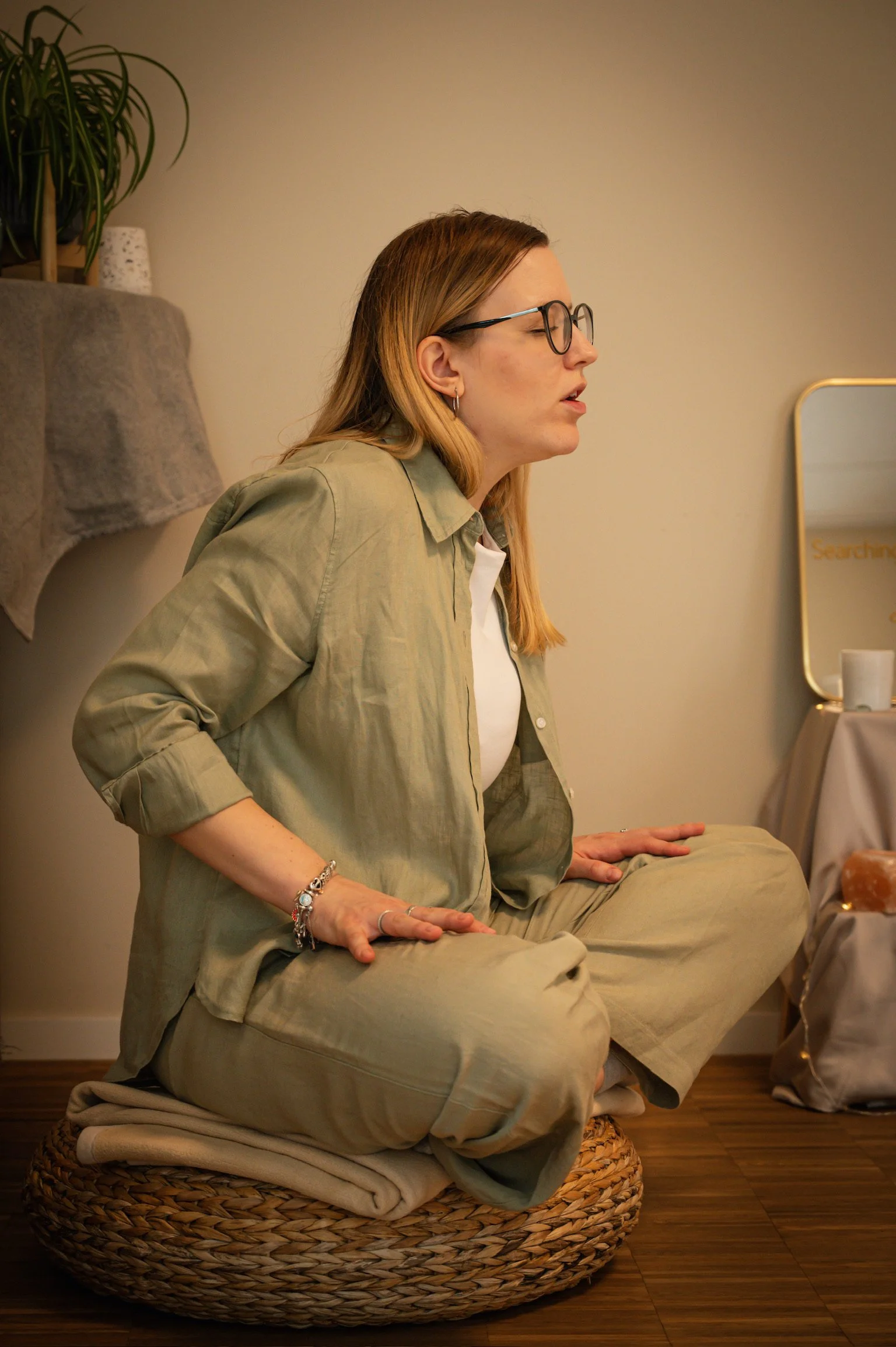
You might notice:
tension in your shoulders
headaches
difficulty sleeping
a racing heart
digestive issues
feeling constantly "on edge"
That doesn't automatically mean something is psychologically wrong. But our bodies often tell the story before our minds are ready to listen.This is one of the reasons I work with body-oriented approaches in therapy. Our bodies hold information that words sometimes can't reach.
→ Read more: What Is Body-Oriented Therapy?
You don't have to have all the answers
One thing often stops people from booking their first session. They think they need to know exactly what they want to talk about. You don't. Some people arrive with a clear reason. Others simply say: "I don't know why I'm here... I just know something doesn't feel right." That's enough. Therapy isn't about arriving with all the answers. It's about making space to explore the questions.
You've become your own harshest critic
Sometimes the loudest voice we hear all day is our own.
"You should be doing more."
"You're too sensitive."
"Why can't you just get over it?"
We become so used to speaking to ourselves this way that we stop noticing how unkind it is. One of the most powerful parts of therapy is learning to recognise that inner dialogue—and slowly beginning to change it.

You're functioning—but not really living
This is something I see often, particularly in high-achieving professionals. You're ticking all the boxes, you're productive, reliable, successful, but underneath it all, you feel disconnected. Like you're constantly moving from one task to the next without really enjoying your life. You don't have to wait until you burn out before asking for support.
You're curious about yourself
Not everyone comes to therapy because something is wrong.Some people come because they want to understand themselves better. Why they react the way they do. Why certain relationships feel difficult. How they can communicate more openly. How they can build a life that feels more aligned with who they are. Therapy isn't only about healing. It can also be about growth.

The idea of therapy keeps coming back
This is one of my favourite signs.
Maybe you've searched for therapists three times already.
Closed the tab.
Come back a few weeks later.
Read another article.
Closed the tab again.
If the thought keeps returning, it might be worth listening to.
Not because therapy is the only answer.
But because something in you is asking for attention.
So... how do you know it's time?
You probably won't wake up one morning with complete certainty. Most people don't. Instead, they reach a point where they realise: "I don't want to keep doing this on my own." And that's enough. You don't need permission to ask for support. You don't need to wait until things become unbearable. Sometimes the bravest thing you can do is become curious about yourself.

What happens next?
If you're considering therapy, your next question is probably:
"What actually happens in the first session?"
I've written a separate guide that walks you through exactly what you can expect—from the questions I'll ask to how we decide whether we're a good fit.
→ Read next: What Happens During Your First Therapy Session?
Or, if you're still wondering how to choose the right therapist, you might find this helpful:
English-Speaking Therapist in Berlin: Finding the Right Therapist for You
If you're looking for an English-speaking therapist in Berlin, you're probably already carrying something that feels heavy.
Maybe you've been feeling anxious for months and can't quite explain why. Maybe work has become overwhelming, your relationship is going through a difficult patch, or perhaps you've recently moved to Berlin and are finding it much harder than you expected.
Or maybe nothing dramatic has happened at all.
You just don't quite feel like yourself anymore.
Whatever brought you here, welcome.

One of the first things I tell people is that starting therapy doesn't mean something has gone terribly wrong. More often than not, it simply means you've reached a point where you'd rather stop figuring everything out on your own.
And if you've already started looking for a therapist, you've probably noticed something else.
There are hundreds of them.
Different qualifications. Different approaches. Different prices. Different waiting lists.
How do you know who's right for you?
Why finding the right therapist matters more than finding a therapist
When people first start looking for therapy, they often focus on practical questions.
"Do they speak English?"
"Are they close to my apartment?"
"Do they have appointments available?"
"Do they offer appointments online?"
Those things matter.
But they're not the most important part.
Therapy is unlike almost any other professional relationship you'll have. You're inviting someone into conversations you may never have had with another person before. You're talking about your fears, your relationships, your hopes, your childhood, your patterns, your disappointments.
Feeling safe with the person sitting opposite you matters.
Research consistently shows that one of the biggest predictors of successful therapy isn't a particular technique or method—it's the therapeutic relationship.
That doesn't mean your therapist needs to become your friend.
It means you should feel listened to.
Respected.
Curious rather than judged.
And able to say, "Actually... I don't agree," without worrying about disappointing them.
Why therapy in English?
This is something I hear surprisingly often. People apologise for wanting therapy in English.
"I speak German..."
"I've lived here for years..."
"I probably should be able to do therapy in German."
But therapy isn't a language exam. It's about expressing yourself in the language where your emotions come most naturally. I've worked with people who speak several languages fluently, yet when we begin talking about difficult relationships, family dynamics or painful experiences, they instinctively switch back to English. Not because they can't speak German. Because vulnerability often lives in our first emotional language. If speaking English helps you express yourself more freely, then that's reason enough.
Living in Berlin can be wonderful—and lonely
Berlin is an incredible city. It's full of creativity, opportunity and people from every corner of the world. It's also a city where many people quietly struggle.Moving abroad often means leaving behind family, long-term friendships and the support systems you didn't even realise you relied on.
At first, everything feels exciting. Then real life begins. You're building a career. Trying to make friends. Learning how everything works. Missing home.Wondering whether everyone else seems to have figured it out better than you. Sometimes therapy becomes the one place where you don't have to pretend you're coping quite as well as your Instagram suggests.
How do you know if it's the right time to start therapy?
People often imagine there's a clear moment when they "need" therapy. In reality, it's rarely that obvious. Some people come because they're experiencing panic attacks. Others because they're exhausted. Some because they're repeating the same relationship patterns over and over again. Others simply because they can't remember the last time they genuinely felt like themselves.

You don't need a diagnosis to begin therapy. You don't have to wait until things become unbearable. Sometimes therapy starts with a very simple thought:
"I don't want to keep living like this."
If you're wondering whether therapy might be helpful, I've written another article exploring that question in more depth.
→ Read next: How Do You Know It's Time to Start Therapy?
Different therapists work differently
If you've spent any time searching online, you've probably come across terms like CBT, psychodynamic therapy, integrative therapy or body-oriented therapy. It can feel like learning a new language. The truth is that different approaches suit different people. Personally, I work integratively. That means I don't believe one therapeutic approach fits everyone.
Some sessions might focus on understanding patterns in your relationships. Others on developing practical tools to manage anxiety or overwhelm. Sometimes we slow down enough to notice what your body is trying to communicate before your mind has caught up. Because our emotions don't only live in our thoughts.
They also live in tight shoulders.
A racing heart.
A clenched jaw.
A nervous system that's forgotten what it feels like to truly relax. If you'd like to learn more about this approach, I've written a separate article explaining body-oriented therapy and why I incorporate it into my work.
→ Read next: What Is Body-Oriented Therapy?
What happens during the first therapy session?
Almost everyone asks this question. And almost everyone imagines something much scarier than reality. Your first session isn't about proving that you deserve therapy. You don't need to prepare a speech or tell your whole life story. Instead, it's simply a conversation. We'll talk about what's brought you here. What's been feeling difficult. What you'd like life to feel like instead. You'll also have space to ask me questions.

Choosing a therapist goes both ways. It's important that you feel comfortable with me just as much as it's important that I understand how I can best support you. There is no pressure to share everything in the first session. We go at your pace. If you're curious about what a first appointment looks like, I've written a more detailed guide here.
→ Read next: What Happens During Your First Therapy Session?
How do you know you've found the right therapist?
This is probably the hardest question to answer. Because the answer isn't logical. It's relational. After your first session, ask yourself:
Did I feel listened to?
Did I feel understood?
Did I feel safe enough to be honest?
Did I leave feeling even slightly lighter?
Therapy isn't always comfortable. Sometimes you'll leave sessions feeling challenged or emotional, but underneath that, there should be a sense that someone is walking alongside you rather than telling you how to live your life.
And if that feeling isn't there? It's okay to keep looking. Finding the right therapist is a little like finding the right pair of hiking boots.
The first pair might be perfectly good. They just might not be the right fit for you.

Frequently Asked Questions
Can I have therapy in English in Berlin?
Yes. Many therapists in Berlin offer therapy in English, particularly those working with the international community.
Do I need a diagnosis?
No.
Many people come to therapy simply because they want support, greater self-awareness or help navigating a challenging period of life.
How often do people usually come to therapy?
It depends on your goals.
Some people come weekly, others every two weeks. Together, we'll decide on a rhythm that feels supportive and realistic.
Is therapy confidential?
Yes.
Everything discussed during our sessions remains confidential, with very limited legal exceptions that we'll discuss at the beginning of our work together.
A final thought
If you've read this far, I'd like to leave you with one thought. Starting therapy isn't a sign that you've failed. It's a sign that you're willing to invest in yourself in the same way you invest in the people and things that matter to you. You don't need to have everything figured out before you reach out. You don't need the perfect explanation. You don't even need certainty.
Sometimes all you need is the feeling that something needs to change. If you're looking for an English-speaking therapist in Berlin and my approach resonates with you, I'd love to meet you for an initial consultation. There's no obligation to continue afterwards—it's simply an opportunity for us to get to know one another and decide whether we're the right fit.
After all, therapy isn't about finding the perfect therapist. It's about finding the person you feel safe enough to begin with.

You’ve Led Teams. You’ve Led Projects. Now Lead Yourself.
There was a time when I was Head of Logistics for an entire country.
I was leading a full department, 10 direct reports. Responsible for over 1,000 indirect positions. National operations. Complex systems. Performance metrics that affected thousands of people.
I set myself a goal: I wanted the best KPI in Europe.
There were over 20 countries in our structure. In my position, across Europe, there were only two women.
Two.
And I was determined to be exceptional.
I worked from 8 in the morning until midnight some days. Back-to-back meetings. Operational issues. Strategic reviews. Crisis management. Staffing challenges. Endless optimisation.
I was good at it. Actually, I was great.
I achieved the best KPI in Europe within 18 months of stepping in the role. On paper, it was everything I had aimed for.
Leadership. Performance. Recognition.
From the outside, I looked powerful.
Inside?
I was overwhelmed to my core. I couldn’t feel my impulses anymore.
I didn’t know what I needed. I didn’t know when I was tired. I didn’t know when something felt off.
All I knew was: Work more. Organise better. Push harder. Don’t feel overwhelmed. Figure it out.
Because this is a man’s world. And this is how it works.
That was the story running quietly in the background. My belief system fully supported the story I was living.
If you want to survive here, and be great, you don’t complain. You don’t slow down. You don’t get soft.
You optimise.
So I optimised.
And then one day, I woke up and I couldn’t.
It wasn’t dramatic. No collapse in a meeting. No public breakdown.
Just a body that said: enough.
Burnout didn’t feel like flames.
It felt like numbness.
Like trying to start a car with no battery.
Like being incredibly capable and completely disconnected at the same time.
That was the moment I realised something confronting:
I knew how to lead a country’s logistics system.
But I did not know how to lead myself.
I knew how to carry responsibility .I knew how to stay composed under pressure. Deliver. Strategise. Adapt.
I had led teams. Led projects. Led crises.
But I had not led:
My boundaries. My pace. My nervous system. My instinct.
I had overridden them to stay effective.
And I had to learn the hard way something that I now see in so many high-achieving women.
You can command a roombut hesitate to say no without guilt.
You can manage budgets, but struggle to manage rest.
You can lead organisations, but feel disconnected from your own body.
This is not a flaw.
It is conditioning.
Conditioning that rewarded output over regulation. Performance over presence. Strength over softness.
And when you operate long enough inside that conditioning, your body starts to brace as default.
You achieve, but tightly. You succeed, but you hold your breath. You expand, but with pressure underneath.
That’s not ambition. That’s protection. Something shifts when a woman steps away long enough to recalibrate.
Not to escape her life. Not to reject ambition. Not to dismantle success.
But to realign it.
To build power that doesn’t cost her body.
To pursue excellence without overriding instinct.
To make decisions from steadiness instead of urgency.
To lead externallybecause she has learned to lead internally.
That shift cannot be understood intellectually.
It has to be experienced.
And that is why I created She Who Leads Herself.
A 7-day immersive experience in Greece this Mayfor women who are successful, and ready to feel grounded inside that success.
This is not a holiday.
Not aesthetic healing.
Not surface inspiration.
It is structured psychological and somatic work designed to recalibrate how you lead, both internally and externally.
It will be small. Application-based. Intentional.
Because depth requires safety. And safety requires discernment.
If you recognise yourself in this: not dramatically, just quietly, trust that.
Applications are now open.
Apply here: https://form.typeform.com/to/H9X53nXj
Ambition Is Not the Problem. Nervous System Dysregulation Is.
Let’s say this clearly.
Ambition is not toxic.
Ambition is not unfeminine.
Ambition is not selfish.
Ambition is not the reason you feel overwhelmed.
Ambition, at its core, is life force.
It is the desire to expand.
To explore.
To stretch beyond what is familiar.
To build something that did not exist before you.
There is nothing inherently dysregulated about wanting more.
The exhaustion you feel is not coming from your goals.
It is coming from how your nervous system relates to them.
The Difference Between Ambition and Survival-Driven Overachievement
There is a profound difference between:
“I desire growth.”
and
“I must prove my worth.”
One expands you.
One tightens you.
One feels grounded and steady.
The other feels urgent and slightly apologetic.
That apology was me for years.
Every time someone questioned my drive:
“Why do you need to move countries again?”
“Why are you studying at two universities?”
“Why do you travel so much?”
“Why do you always push yourself like this?”
I would laugh.
“Oh, I’m a bit crazy.”
“Maybe something’s wrong with me.”
“I just can’t sit still.”
I turned it into self-deprecating humour.
Because somewhere inside, I believed ambition required justification.
Like wanting more made me excessive.
Like desire needed softening so other people would feel comfortable.
That is what nervous system dysregulation can look like in high-achieving women.
Not less ambition.
Just ambition wrapped in apology.
What Dysregulation Actually Looks Like
Dysregulation is subtle.
You still achieve.
You still perform.
You still expand.
But internally, you do not feel steady while doing it.
Because when your nervous system does not feel safe unless you are achieving, growth becomes loaded.
That is when:
Rest feels irresponsible.
Stillness feels threatening.
Boundaries feel risky.
Slowing down feels dangerous.
Wanting something simply because you want it feels indulgent.
You do not have a productivity problem.
You have a safety problem.
Insight Is Not the Same as Regulation
Many capable women are deeply self-aware.
They know their attachment patterns.
They have read the books.
They have been in therapy.
They can articulate their childhood dynamics perfectly.
I could too.
I understood why I moved.
Why I built.
Why I stretched.
But insight without nervous system regulation changes very little.
Your body does not shift through logic.
It shifts through experience.
Through staying in expansion without apologising.
Through choosing desire without defending it.
Through letting yourself want something without proving it is reasonable.
What Embodied Leadership Actually Means
Embodied leadership means:
You can pursue ambition without abandoning yourself.
You can want something without minimising it.
You can make powerful decisions without collapsing into doubt afterward.
You can hold responsibility without holding your breath.
Recently, I realised how much this had shifted for me.
Someone tried to box me into an old narrative again.
“You’re exaggerating.”
“Why would you need a three-day wedding?”
“Isn’t that a bit much?”
For a split second, I felt the old reflex.
The urge to laugh.
To shrink.
To say, “I know, I’m ridiculous.”
Instead, I said:
“Why not? I really wanted to.”
No apology.
No justification.
No softening.
That moment mattered more than any degree or promotion.
Because it was not about the wedding.
It was about my nervous system no longer interpreting desire as threat.
When Your Nervous System Feels Safe in Your Ambition
This is not about bigger weddings or more achievements.
It is about building a baseline where your body does not interpret expansion as danger.
Most women are trained to lead externally.
To optimise.
To perform.
To deliver.
Very few are taught how to regulate the impulse to apologise for wanting more.
Very few are taught how to separate ambition from proving.
When your nervous system feels safe in your ambition:
You do not shrink.
You do not overexplain.
You do not brace.
You expand steadily.
And that is a completely different way to lead.

A Personal Invitation
This is exactly why I am creating something intentional this May.
Not as an escape from ambition.
Not as rebellion against success.
But as recalibration.
Seven days away from constant performance.
Seven days to experience ambition without protection driving it.
Seven days to practise desire without apology.
Boundaries without collapse.
Power without self-abandonment.
Embodied leadership cannot be understood intellectually alone.
It must be experienced.
If something in you recognises this — not dramatically, just quietly — that is not coincidence.
It is readiness.
I will be sharing more very soon.
The Hidden Cost of Being the Strong One
There is a particular kind of woman I work with.
You probably recognise her.
She is capable.
Reliable.
Composed under pressure.
She delivers consistently.
She anticipates problems before they happen.
She sends emails on Sundays.
She schedules meetings before anyone even says there’s an issue.
She is the one people turn to when things get hard.
And she rarely collapses.
Not publicly, anyway.
From the outside, she looks powerful.
From the inside, she is tired.
Not dramatic burnout.
Not a breakdown.
Not dysfunction.
Just a quiet, persistent exhaustion that sits behind her eyes.
The kind of exhaustion that doesn’t get sympathy because she’s still performing well.
The kind of tired that whispers:
“I don’t know how long I can keep doing this.”
This is the hidden cost of being the strong one.
When Being the Strong One Becomes a Survival Strategy
For many high-functioning women, being “the strong one” did not start as a personality trait.
It started as survival.
At some point: childhood, early career, a relationship… you learned something precise:
If I hold it together, things stay stable.
If I perform, I stay safe.
If I don’t need too much, I won’t be rejected.
If I am useful, I am valued.
You may not consciously remember the moment.
But your nervous system does.
It encoded strength as security.
This is where over-functioning begins.
And over time, it becomes identity.
These are called beliefs, images about who we are and how the world is supposed to look like.
High-Functioning Burnout Is Hard to Recognise
High-functioning burnout does not look chaotic.
It looks successful.
You still meet deadlines.
You still show up.
You still lead.
But internally, you are bracing.
Living in survival mode while succeeding externally creates a specific kind of fatigue.
You are not failing.
You are operating in constant activation.
And constant activation is exhausting.
Many women who appear ambitious are actually operating from protection.
Protection from:
Being irrelevant.
Being replaced.
Being overlooked.
Being too much.
Being not enough.
Protection never turns off.
It monitors.
Anticipates.
Corrects.
Pushes.
Even when no one is demanding it.
The Nervous System Behind Over-Functioning
Over-functioning is not a productivity problem.
It is a nervous system pattern.
When usefulness equals safety, slowing down feels dangerous.
Rest feels irresponsible.
Boundaries feel risky.
Delegation feels threatening.
Because if usefulness drops, your body registers risk.
So you compensate.
You scan rooms for what needs fixing.
You manage other people’s emotions.
You over-deliver.
You rarely ask for help.
Not because you are incapable.
Because your system equates strength with survival.
This is what living in survival mode looks like for high-achieving women.
It does not look like collapse.
It looks like competence.
The Identity Trap of Always Being the Strong One
Here is the part no one talks about.
When strength becomes your identity, you do not know who you are without it.
You do not know how to:
Sit without scanning.
Rest without earning it.
Say no without spiralling internally.
Be uncertain without overcompensating.
You lead well.
But you lead tightly.
You succeed.
But you brace while doing it.
You achieve.
But your body never fully exhales.
And eventually, the cost shows up as:
Chronic tension.
Irritability.
Emotional numbness.
Disconnection.
Relationship strain.
High-functioning burnout.
How to Stop Living in Survival Mode?
The solution is not becoming less ambitious.
It is becoming regulated.
There is a difference between ambition and self-abandonment.
Regulated leadership feels steady.
Clear.
Grounded.
You can pursue growth without your nervous system interpreting it as threat.
But this requires something radical for women who built their lives on strength.
It requires allowing your body to feel safe without earning it.
Safe without delivering.
Safe without solving.
Safe without being indispensable.
That can feel terrifying at first.
Because if safety is no longer tied to performance…
Who are you then?
That question is not a crisis.
It is an initiation.
A Different Way to Lead
There is another way to live.
Not less powerful.
Not less capable.
Not less ambitious.
But regulated.
A way of leading where your body is not in survival while your career is in motion.
A way of succeeding without constant bracing.
If you recognise yourself in this pattern, you are not broken.
You are patterned.
And patterns can shift.
This is the work I do with high-achieving women who are tired of being the strong one.
If you are ready to move from survival mode to sustainable leadership, you can explore working together here.

How Do You Know Which Therapist Is Right for You?
It all begins with an idea.
Let’s be honest.
Finding the right therapist can feel a little like swiping on a dating app. Except there’s no cocktail at the end and ghosting is… frowned upon.
You scroll through bios with headshots ranging from “intense eye contact” to “holding a crystal like it might float away.”
You wonder:
Do I need someone who gently holds space or someone who calls me out?
Is it weird to choose a therapist because they look kind?
Do I even know what I need?
First of all — if you’re asking these questions, you’re doing it right.
You’re not outsourcing the decision.
You’re checking in.
That alone tells me you care about fit.
And fit matters.
So how do you know which therapist is right for you?
Something shifts — even in the first session.
Not fireworks. Not instant healing. Just a subtle click.
Maybe you say something you’ve never said out loud before.
Maybe you notice your shoulders drop halfway through.
Maybe you leave feeling slightly lighter. Or curious instead of stuck.
That’s usually a good sign.
Therapy is not about being impressed.
It’s about feeling safe enough to be honest.
2. You’re not performing.
Some of us are excellent at being composed. Articulate. Insightful. Even in therapy.
The right therapist won’t reward the performance.
They’ll gently slow you down.
If you hear yourself say, “Wait… I’ve never actually said that before,” and your body doesn’t immediately brace — that’s important.
3. You feel safe being messy.
There will be sessions where you ramble.
Where you cry.
Where you swear.
Where you laugh at something completely inappropriate.
You should not feel judged.
Or rushed.
Or subtly corrected into being “better.”
You should feel held.
Not fixed.
4. They’re not pretending to be a guru.
If someone positions themselves as having all the answers, run.
Therapy is collaborative.
It’s relational.
It’s human.
The right therapist will offer perspective.
They will challenge you.
They will sometimes call you out.
But they won’t position themselves above you.
5. Over time, you feel more like yourself.
Not a new, shiny, optimised version.
Just… more you.
More grounded.
More aware.
Less reactive.
Less tightly wound.
Therapy is not about becoming someone else.
It’s about regulating enough to access who you already are.
And if it’s not a match?
That’s not failure.
It just means that relationship isn’t the one that will hold your growth.
In therapy, relationship is the work.
You deserve a space where you can exhale.
Not impress.
Not shrink.
Not perform.
Swipe left on what doesn’t feel right.
You’ll know when it’s a yes.
And when it is, it won’t feel dramatic.
It will feel steady.
If you’re ready to explore what it’s like to work together, you can reach out.
We’ll start with a conversation.
No pressure.
No performance.
Just clarity.

Is It Okay to Be Picky About Your Therapist? (Yes. Especially If They Fall Asleep.)
It all begins with an idea.
Let me tell you a true story.
I was in my early twenties, sitting across from a therapist, trying very hard to sound emotionally mature while describing something that felt huge at the time. Heartbreak. Betrayal. That general “I-don’t-know-who-I-am-but-please-fix-it” flavor of suffering.
I was mid-sentence when I noticed something strange.
Her head… bobbed.
Then again.
Then again.
I paused.
Maybe she was meditating?
Blinking slowly?
Demonstrating some radical presence technique I hadn’t learned yet?
No.
She was asleep.
The heat rushed into my face.
I remember thinking, This cannot be happening.
So I asked, “Am I boring you?”
She calmly replied she wasn’t sleeping. She was just resting her eyes.
Resting her eyes.
As I was spilling my 22-year-old heart out.
And just when I thought we had reached peak absurdity, she confidently said she remembered everything about my fiancé.
Spoiler alert.
There was no fiancé.
And the name she used for my partner at the time was completely made up.
I was stunned.
Not just annoyed.
Not just embarrassed.
I felt unseen.
Dismissed.
Small.
Alone.
And I did what many emotionally mature adults do.
I ghosted.
I never went back.
Now, with years of training and perspective, I can hold that story with more nuance.
But back then?
It hurt.
Because therapy is not just a service.
It is a relationship.
And relationships require presence.
Here is what I learned from that experience.
You are allowed to be picky.
We do not question it when someone changes hairdressers.
Or dentists.
Or personal trainers.
But with therapy, there is often this quiet guilt.
Maybe it’s me.
Maybe I’m too sensitive.
Maybe I’m not trying hard enough.
No.
You are not too much.
You are someone who wants to feel safe while being vulnerable.
That is reasonable.
Here are valid reasons to switch therapists, none of which make you a “difficult” client:
You feel judged, dismissed, or subtly corrected.
You do not feel emotionally safe enough to open up.
Your therapist seems distracted or not fully present.
Your body tightens instead of softens when you walk into the room.
Your gut keeps whispering, this doesn’t feel right.
And something else people do not say enough.
You do not owe loyalty to a therapeutic relationship that is not working.
There is no loyalty tax in therapy.
You are not quitting.
You are advocating for yourself.
Now, here is the important nuance.
Discomfort is not always a red flag.
Some sessions will be hard.
Some weeks you will not want to go.
Sometimes you will feel exposed or challenged.
That can be growth.
The key is learning to distinguish between:
This is uncomfortable but safe.
And
This feels unsafe or dismissive.
Your nervous system knows the difference.
You are not being picky.
You are being attuned.
And that is powerful.
You deserve to be taken seriously.
To be listened to.
To be met.
If you are looking for a therapeutic relationship where presence is non negotiable, you can reach out and explore whether working together feels aligned.
Because the right fit does not feel flashy.
It feels steady.
And awake.

Body-Oriented Therapy: When Your Body Has More to Say Than Your Words
It all begins with an idea.
If you have ever sat in therapy and said,
“I don’t know how I feel,”
while your stomach was tight,
your jaw was clenched,
and your shoulders were somewhere near your ears…
then you have already met the most honest part of you.
Your body.
Body-oriented therapy, or somatic therapy, is exactly what it sounds like.
It is therapy that listens to the body, not just the narrative.

Because here is something we do not talk about enough.
You can understand your story perfectly and still feel stuck inside it.
You can explain your childhood.
Name your attachment style.
Quote the book.
And still brace when someone raises their voice.
Still shut down in conflict.
Still panic when you try to rest.
That is because your body holds what your mind has already rationalised.
The held breath.
The tightened jaw.
The subtle freeze when something feels unsafe.
The urge to please.
The urge to disappear.
The urge to push harder.
Your body remembers what you survived.
So what actually happens in body-oriented therapy?
No, you are not asked to do yoga.
No one forces you to breathe in a dramatic way.
You do not have to “perform” vulnerability.
We slow down.
We notice.
Where does your chest tighten when you speak about your mother?
What happens in your stomach when you say the word no?
Do your feet feel grounded when you talk about shame?
What happens in your throat when you try to express anger?
Sometimes we explore breath.
Sometimes posture.
Sometimes the difference between collapse and steadiness.
Sometimes we simply stay with a sensation long enough for it to shift.
Often the most powerful moment in a session is not a breakthrough sentence.
It is a deep exhale.
One you did not know you were holding.
Who is this work for?
For the woman who says:
“I’m anxious but I don’t know why.”
“I react before I can think.”
“I feel numb, but I know I’m not okay.”
“I’ve talked about this for years and nothing changes.”
It is for you if insight alone has not created change.
If you are tired of analysing your feelings but still feeling trapped in them.
If you want to build a nervous system that feels safe enough to live the life you are building.
The body is not something to fix.
It is not dramatic.
It is not inconvenient.
It is not irrational.
It is intelligent.
When you begin to listen to it instead of overriding it, something shifts.
Not theatrically.
Steadily.
And often the body’s response is not fireworks.
It is relief.

If you are curious what it would feel like to work this way, we can explore that together.
Because healing is not only something you understand.
It is something you experience.
In your body.

How Do You Know You’re Ready for Therapy? (Hint: You Don’t Need to Be Falling Apart)
It all begins with an idea.
Let’s clear something up immediately.
You do not need to be in crisis to start therapy.
You do not need to wait until you cannot get out of bed.
Or you are crying daily.
Or you have rage-quit your job while loudly insisting “you’re fine.”
Although if that has happened, we can absolutely talk.
Here is something most people do not realise.
Readiness rarely feels dramatic.
It is usually subtle.
It sounds like:
“I don’t know what’s wrong, but something feels off.”
“I should be grateful. Why am I not?”
“I keep repeating this pattern and I’m tired.”
It is not a breakdown.
It is a quiet misalignment.
Sometimes it feels like a low hum in the background of your life.
A tension you cannot quite name.
A sense that you are functioning — but not fully living.
That is often readiness.
So what does being ready actually look like?
You are tired of carrying everything alone.
Maybe you are the strong one.
The capable one.
The one people rely on.
You have coping strategies. You have productivity systems. You have resilience.
But lately, resilience feels more like bracing.
There comes a point where strength becomes isolating.
That point is often where therapy begins to make sense.
You are curious about yourself.
Not shattered. Not desperate.
Curious.
Curious about why you react so quickly.
Why certain conversations leave you drained.
Why rest makes you uneasy.
Why you shrink in rooms where you are objectively competent.
Curiosity is not a small thing.
It is your nervous system saying, “We could live differently.”
You want more — but you cannot fully explain what “more” means.
More steadiness.
More clarity.
More ease in your own body.
More access to the version of you that is not constantly performing.
You may not have a dramatic story.
You may not have a clear reason.
But you feel the tug.
And here is something important.
You might book a session and immediately think,
“Is this serious enough?”
“Am I wasting their time?”
“Other people have bigger problems.”
You are not wasting anyone’s time.
You are responding to your own internal signal.
There is no hierarchy of deserving.
You do not have to collapse to justify support.
Sometimes readiness is not loud.
It is a whisper.
And the ones who listen to whispers tend to change their lives before crisis forces them to.
If something in you has been quietly asking for more, that is enough.
You do not need a dramatic origin story.
You need honesty.
And a space where you do not have to hold it all together.

How Do You Know If Therapy Is Working? (Even When It Doesn’t Feel Like It Is)
Somewhere between Session 3 and Session 8, a very specific thought tends to appear:
“Is this even helping?”
“Shouldn’t I feel better by now?”
“Why do I feel worse?”
Let me say this clearly.
Therapy is not a straight line.
It is not a painkiller.
It is closer to physiotherapy for an old injury you forgot you were compensating for.
You have been walking with a subtle limp for years.
You adjusted.
You coped.
You functioned.
Now someone is gently saying, “Let’s look at that.”
And when you start using muscles you’ve ignored for a decade, they ache.
That ache does not mean it’s failing.
It means you’re engaging something that has been offline.
So how do you know therapy is working?
You react differently.
Not dramatically.
Subtly.
You pause instead of snapping.
You breathe before replying.
You say no — even though your stomach flips when you do.
That pause is regulation.
Regulation is change.
You feel more.
This one confuses people.
You might cry more.
Or notice anger where you used to feel numb.
Or suddenly realise how tired you’ve been.
Feeling more is not regression.
It is thawing.
If you have been bracing for years, softness can feel destabilising at first.
That does not mean it’s wrong.
It means your nervous system is expanding its range.
You start catching your patterns in real time.
You notice the over-apology.
The urge to fix.
The instinct to disappear.
The moment you abandon your boundary.
And instead of unconsciously repeating it, you think:
“Oh. I’m doing it again.”
That awareness is not small.
You cannot shift what you cannot see.
Your relationships change.
This is often the most confronting part.
As you become more honest, some relationships deepen.
Others become uncomfortable.
When you stop people pleasing, not everyone applauds.
But therapy is not about becoming easier to handle.
It is about becoming more aligned.
And yes.
Some weeks therapy feels expansive.
Other weeks it feels messy.
You talk about your dog.
You cry about something that seems insignificant.
You leave unsure what just happened.
All of that can still be movement.
You are allowed to ask your therapist,
“Is this normal?”
You are allowed to feel impatient.
You are allowed to want progress.

But if you notice even small shifts —
more breath,
more honesty,
less automatic reaction,
more steadiness —
then something is changing.
Healing is rarely cinematic.
It is often quiet.
It is in the pause before the reaction.
In the boundary you hold.
In the night you sleep slightly better.
You are not doing therapy wrong.
You are building capacity.
And capacity takes repetition.